- Archaeology
Divers have unearthed the largest cog shipwreck ever discovered in a strait off Denmark, signalling a period of economic development in medieval Europe.
When you purchase through links on our site, we may earn an affiliate commission. Here’s how it works.
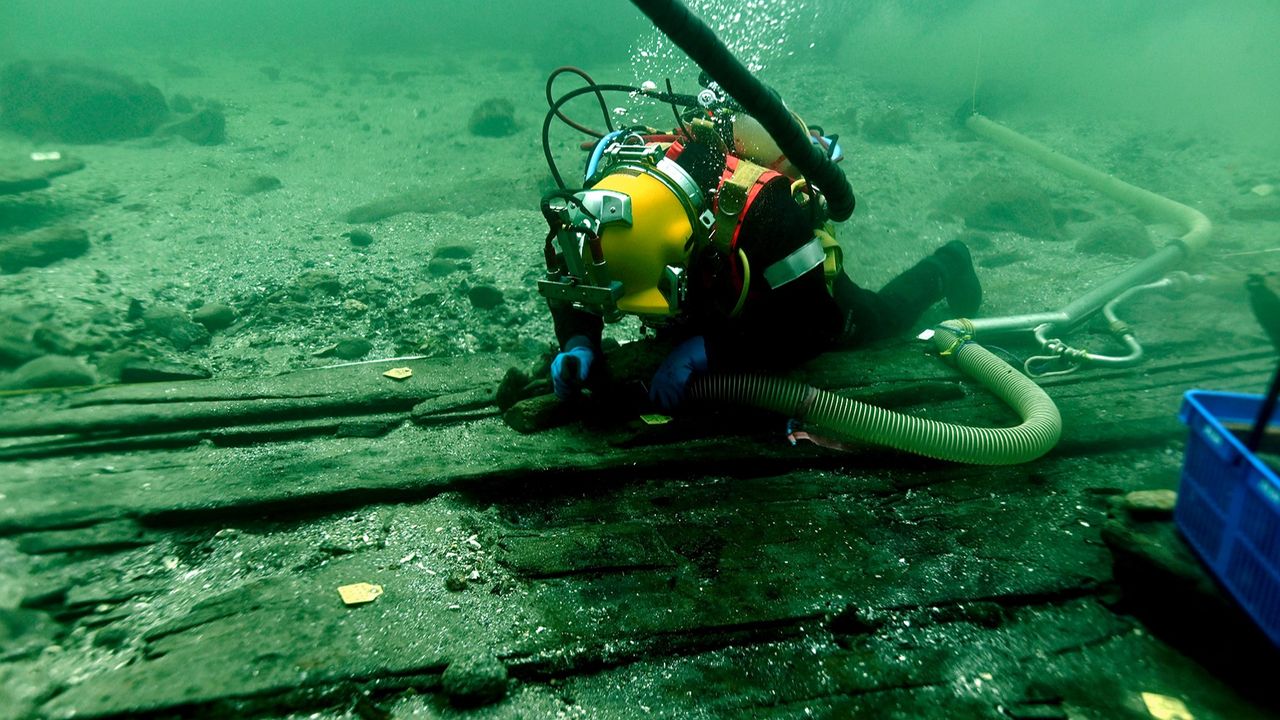
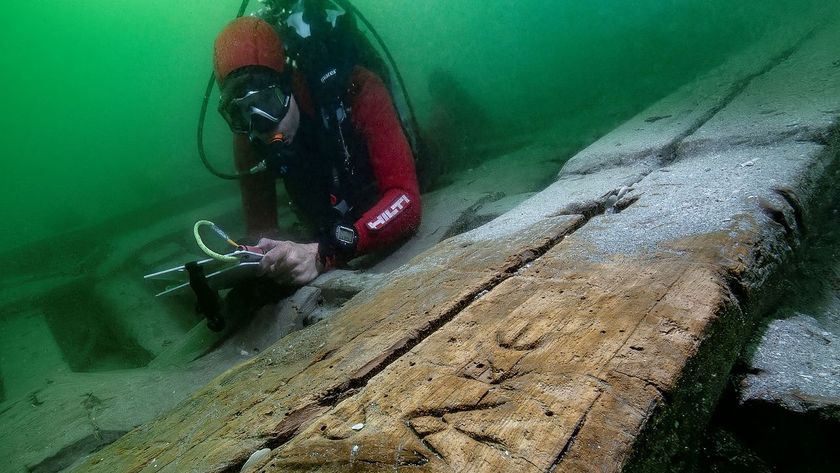
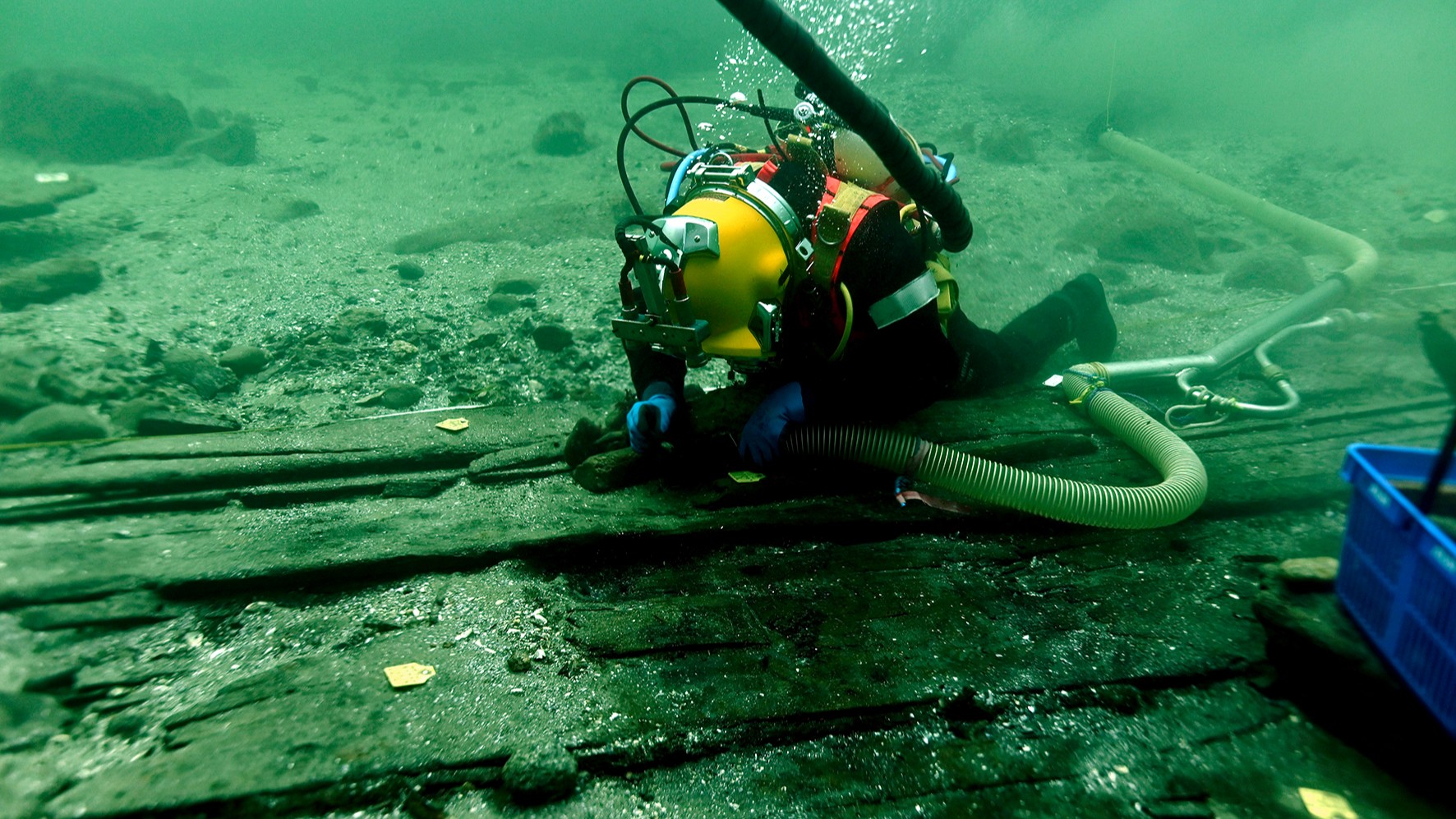 Divers removed sand and silt covering the ship to reveal its ancient frame.
(Image credit: Viking Ship Museum)
Share
Share by:
Divers removed sand and silt covering the ship to reveal its ancient frame.
(Image credit: Viking Ship Museum)
Share
Share by:
- Copy link
- X
Archaeologists have discovered a massive medieval shipwreck sitting at the bottom of a strait off Denmark.
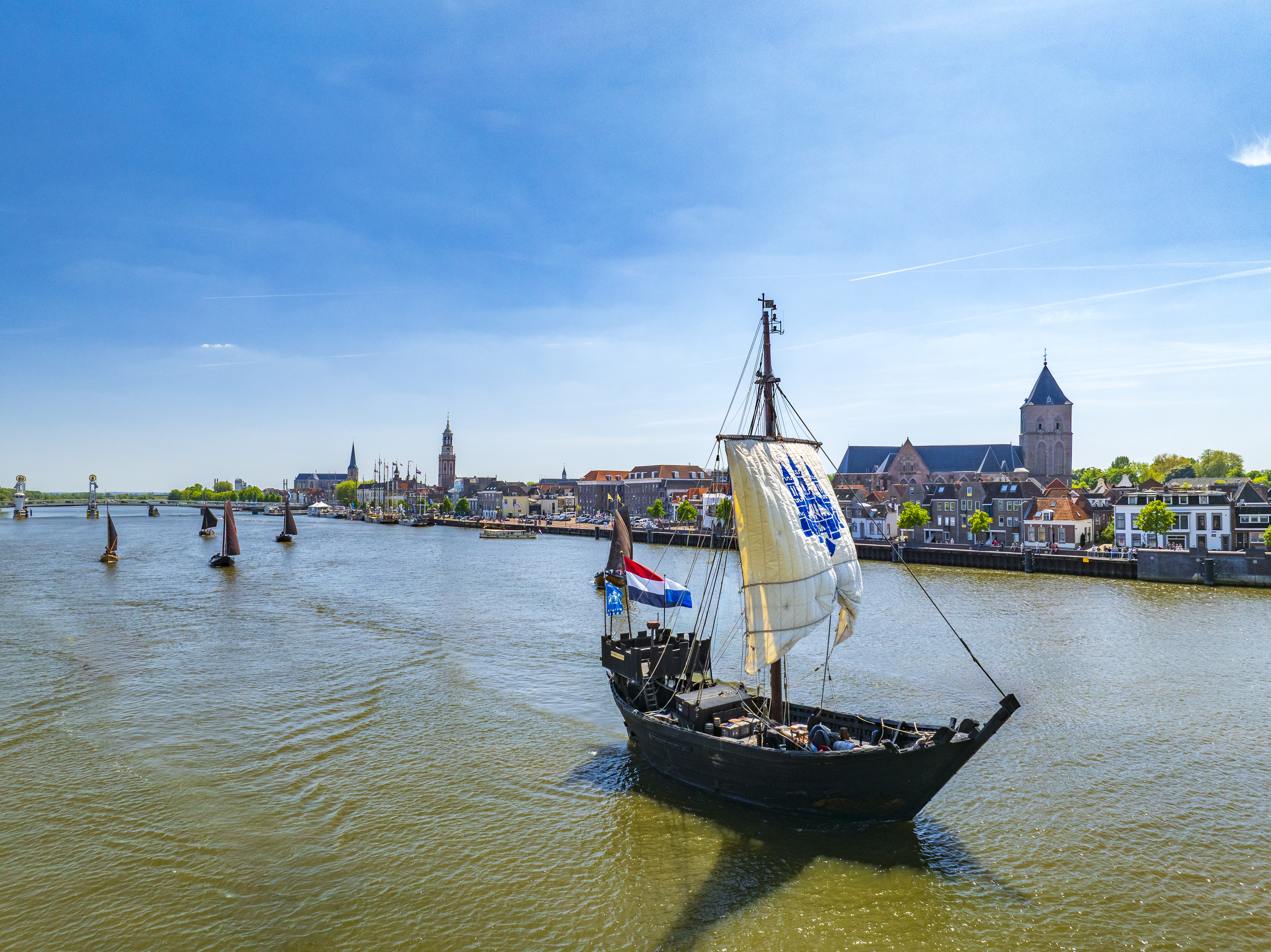
The 600-year-old ship was a cog: a round, single square-sailed vessel that was one of the most advanced ship types in the Middle Ages. At around 92 feet (28 meters) long and 30 feet (9 m) wide, the newly-found ship is the largest cog ever discovered, according to researchers at Denmark's Viking Ship Museum.
The researchers discovered the vessel off Copenhagen in Øresund, or "the Sound" in English — the strait between Denmark and Sweden. They described it as a "super ship" that could transport hundreds of tons of cargo at low cost during a period of burgeoning trade in the 14th and 15th centuries.
You may like-
 2,400-year-old fingerprint from mysterious sea raider found preserved on Scandinavia's oldest plank boat
-
 Scientists pull up first riches from 'Holy Grail of shipwrecks' that sank off Colombia in 1708
-
 2,000-year-old shipwreck may be Egyptian 'pleasure barge' from last dynasty of pharaohs
"The find is a milestone for maritime archaeology," excavation leader Otto Uldum said in a statement. "It is the largest cog we know of, and it gives us a unique opportunity to understand both the construction and life on board the biggest trading ships of the Middle Ages."
The discovery was made accidentally as part of seabed investigations for a new artificial island that Denmark plans to create off Copenhagen. Researchers removed what they described as "centuries of sand and silt" to reveal the outline of the ship, which they named Svælget 2 after the channel in which it was found.
Svælget 2 was well preserved on the seabed, located 43 feet (13 m) below the surface. Sand protected its starboard side, which retained traces of delicate rigging — unheard of in previous cog wrecks. The researchers also identified a brick galley, the first in a medieval ship in Danish waters, which allowed the crew to cook hot meals on an open fire. Artifacts on the ship included cooking materials, such as pots and bowls, and the crew's personal objects, such as hair combs and rosary beads for prayer, according to the statement.
The researchers have yet to find Svælget 2's cargo. Uldum noted that the hold wasn't covered, so cargo barrels would have floated away from the ship as it sank. However, with no signs of military use, Svælget 2 is likely to have been a merchant ship, the researchers said.
Sign up for the Live Science daily newsletter nowContact me with news and offers from other Future brandsReceive email from us on behalf of our trusted partners or sponsorsBy submitting your information you agree to the Terms & Conditions and Privacy Policy and are aged 16 or over.
Svælget 2 was constructed in 1410, a fact the researchers deduced by tree-ring dating annual growth patterns on the ship's wood. The team also compared the patterns to previously published tree-ring data and determined that the ship's planks were from Poland, while the frame of the ship came from the Netherlands. Furthermore, construction patterns suggested that the planks were imported while the frame was cut at the ship's building site, indicating that the construction relied on a complex timber trade network across Northern Europe, according to the statement.
RELATED STORIES—Fingerprint of ancient seaborne raider found on Scandinavia's oldest plank boat
—2,000-year-old shipwreck may be Egyptian 'pleasure barge' from last dynasty of pharaohs
—Divers recover more than 1,000 gold and silver coins from 1715 'Treasure Fleet' shipwreck in Florida
The giant ship was designed for a perilous journey from the Low Countries (including what is now the Netherlands) to the trading towns of the Baltic. A cog of this size would have allowed for the transportation of bulky everyday goods such as salt, timber, bricks and basic food items over long distances, which the researchers said would have previously only been done for luxury goods.
"The cog revolutionised trade in Northern Europe," Uldum said. "It made it possible to transport goods on a scale never seen before."
 Patrick PesterSocial Links NavigationTrending News Writer
Patrick Pester is the trending news writer at Live Science. His work has appeared on other science websites, such as BBC Science Focus and Scientific American. Patrick retrained as a journalist after spending his early career working in zoos and wildlife conservation. He was awarded the Master's Excellence Scholarship to study at Cardiff University where he completed a master's degree in international journalism. He also has a second master's degree in biodiversity, evolution and conservation in action from Middlesex University London. When he isn't writing news, Patrick investigates the sale of human remains.
Show More CommentsYou must confirm your public display name before commenting
Please logout and then login again, you will then be prompted to enter your display name.
Logout Read more Scientists pull up first riches from 'Holy Grail of shipwrecks' that sank off Colombia in 1708
 900-year-old burials of Denmark's early Christians discovered in medieval cemetery
 Sunken city discovered in Kyrgyzstan lake was a medieval hotspot on the Silk Road — until an earthquake wiped it out
 Viking Age woman found buried with scallop shells on her mouth, and archaeologists are mystified
 Medieval spear pulled from Polish lake may have belonged to prince or nobleman
 Caergwrle Bowl: A 3,300-year-old stone-and-tin bowl with gold oars and 'protective eyes'
Latest in Archaeology
Caergwrle Bowl: A 3,300-year-old stone-and-tin bowl with gold oars and 'protective eyes'
Latest in Archaeology
 People, not glaciers, transported rocks to Stonehenge, study confirms
 Some of the oldest harpoons ever found reveal Indigenous people in Brazil were hunting whales 5,000 years ago
 World's oldest rock art, giant reservoir found beneath the East Coast seafloor, black hole revelations, and a record solar radiation storm
 5,500-year-old human skeleton discovered in Colombia holds the oldest evidence yet that syphilis came from the Americas
 2.6 million-year-old jaw from extinct 'Nutcracker Man' is found where we didn't expect it
 2,400-year-old Hercules shrine and elite tombs discovered outside ancient Rome's walls
Latest in News
2,400-year-old Hercules shrine and elite tombs discovered outside ancient Rome's walls
Latest in News
 'Pain sponge' derived from stem cells could soak up pain signals before they reach the brain
 An ocean the size of the Arctic once covered half of Mars, new images hint
 Arctic blast probably won't cause trees to explode in the cold — but here's what happens if and when they do go boom
 Wegovy now comes in pill form — here's how it works
 AI can develop 'personality' spontaneously with minimal prompting, research shows. What does that mean for how we use it?
 'Earthquake on a chip' uses 'phonon' lasers to make mobile devices more efficient
LATEST ARTICLES
'Earthquake on a chip' uses 'phonon' lasers to make mobile devices more efficient
LATEST ARTICLES- 1AI can develop 'personality' spontaneously with minimal prompting, research shows. What does that mean for how we use it?
- 2World's oldest rock art, giant reservoir found beneath the East Coast seafloor, black hole revelations, and a record solar radiation storm
- 3Why the rise of humanoid robots could make us less comfortable with each other
- 4Why don't you usually see your nose?
- 5People, not glaciers, transported rocks to Stonehenge, study confirms