- Technology
- Computing
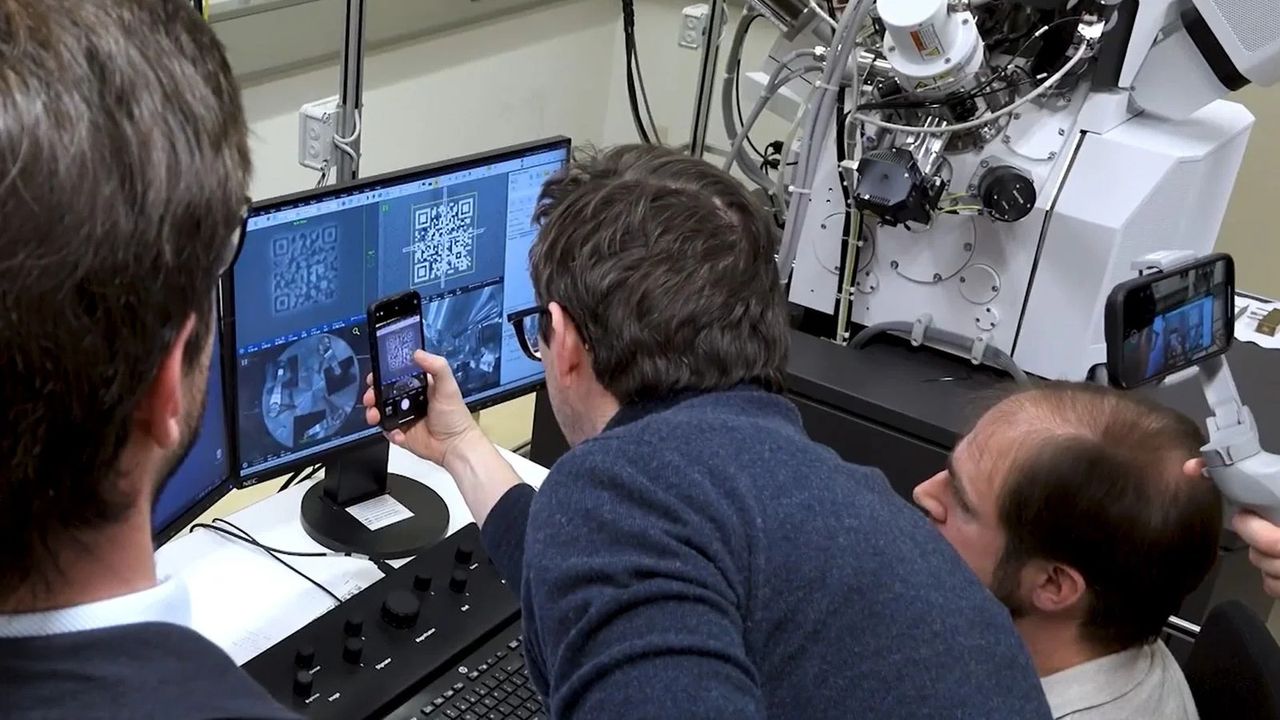
Scientists created a tiny matrix that stores data by etching its grid into a thin ceramic film with a focused ion beam.
When you purchase through links on our site, we may earn an affiliate commission. Here’s how it works.
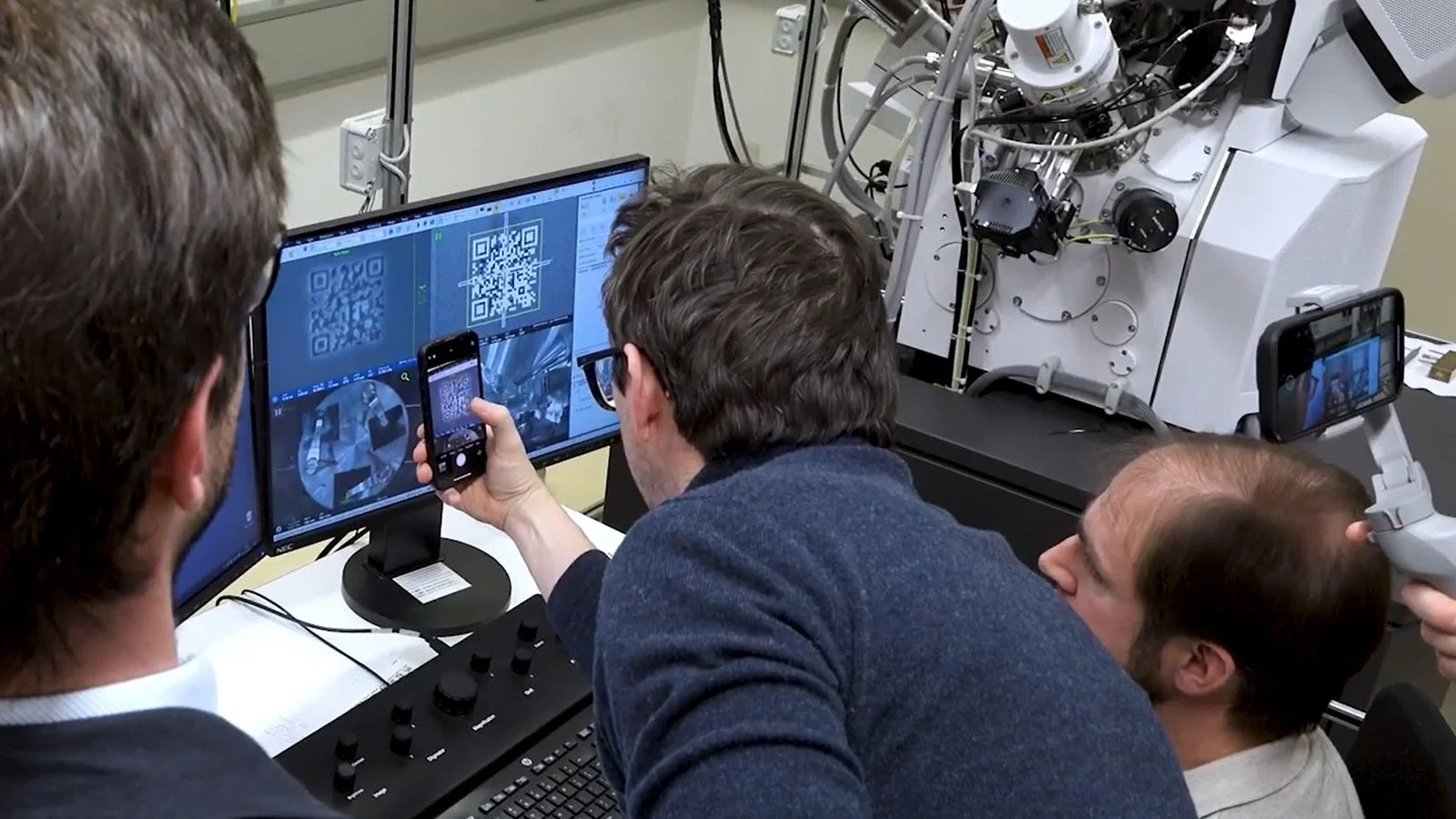 Scientists at TU Wien testing the QR code.
(Image credit: TU Wien)
Scientists at TU Wien testing the QR code.
(Image credit: TU Wien)
- Copy link
- X
Get the world’s most fascinating discoveries delivered straight to your inbox.
Become a Member in Seconds
Unlock instant access to exclusive member features.
Contact me with news and offers from other Future brands Receive email from us on behalf of our trusted partners or sponsors By submitting your information you agree to the Terms & Conditions and Privacy Policy and are aged 16 or over.You are now subscribed
Your newsletter sign-up was successful
Want to add more newsletters?

Delivered Daily
Daily Newsletter
Sign up for the latest discoveries, groundbreaking research and fascinating breakthroughs that impact you and the wider world direct to your inbox.
Signup +
Once a week
Life's Little Mysteries
Feed your curiosity with an exclusive mystery every week, solved with science and delivered direct to your inbox before it's seen anywhere else.
Signup +
Once a week
How It Works
Sign up to our free science & technology newsletter for your weekly fix of fascinating articles, quick quizzes, amazing images, and more
Signup +
Delivered daily
Space.com Newsletter
Breaking space news, the latest updates on rocket launches, skywatching events and more!
Signup +
Once a month
Watch This Space
Sign up to our monthly entertainment newsletter to keep up with all our coverage of the latest sci-fi and space movies, tv shows, games and books.
Signup +
Once a week
Night Sky This Week
Discover this week's must-see night sky events, moon phases, and stunning astrophotos. Sign up for our skywatching newsletter and explore the universe with us!
Signup +Join the club
Get full access to premium articles, exclusive features and a growing list of member rewards.
Explore An account already exists for this email address, please log in. Subscribe to our newsletterScientists have created the smallest QR code in the world, measuring just 3.07 × 10⁻⁹ square inches (1.98 square micrometers). It can preserve data for thousands of years and it's so small that you need an electron microscope to see it.
Each pixel of the QR code is just 49 nanometers across, even smaller than a bacterium, ensuring its place as a Guinness World Record. It was created by etching its grid into a thin ceramic film with a focused ion beam. It's about 37% the size of the previous world record holder and about 0.0000004% the size of a standard 0.8-square-inch (2 cm2) QR code.
Article continues below You may like-
 Microsoft can now store data for 10,000 years on everyday glass thanks to laser breakthrough
-
 New 'DNA cassette tape' can store up to 1.5 million times more data than a smartphone — and the data can last 20,000 years if frozen
-
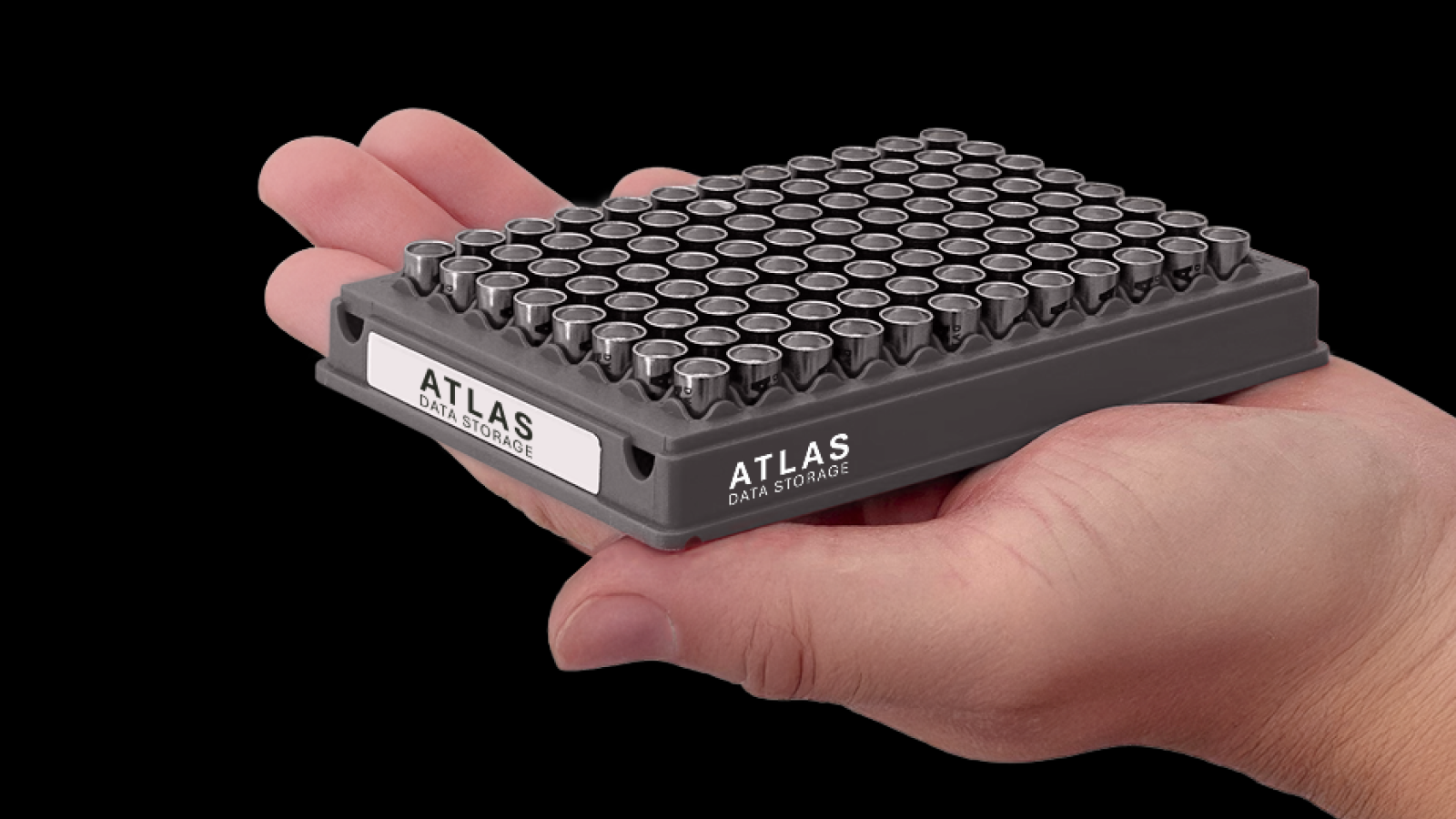 This new DNA storage system can fit 10 billion songs in a liter of liquid — but challenges remain for the unusual storage format
The creation of a data-storage unit on such a tiny scale opens up the potential for extremely high storage density. The scientists at TU Wien in Austria, who developed the QR code in collaboration with data-storage firm Cerabyte, estimate that over 2 terabytes of data could fit onto the surface area of a single A4 (8½ x 11) sheet of paper etched with the pixels — that's more data than you can keep on most consumer laptops.
In contrast, the same area covered in 0.8 square inch (2 cm2) Version 1 QR codes would hold only about 2.5 kilobytes, the equivalent of a page of plain text.
QR codes that can store data for millennia
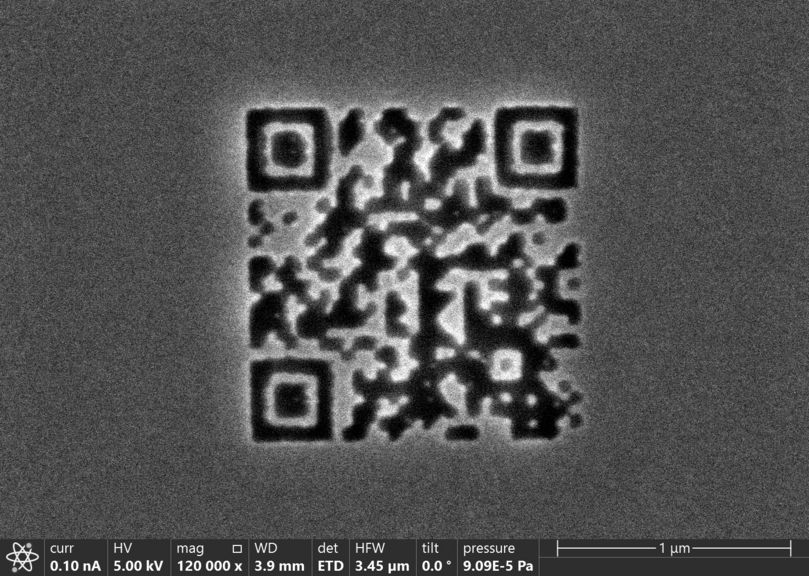
Despite its record-breaking size, the QR code is even more impressive for its durability, the team said.
"Structures on the micrometer scale are nothing unusual today — it is even possible to fabricate patterns made of individual atoms," Paul Mayrhofer, head of the Thin Film Materials Science Research Group at TU Wien, said in a statement. "However, that alone does not result in a stable, readable code."
Sign up for the Live Science daily newsletter nowContact me with news and offers from other Future brandsReceive email from us on behalf of our trusted partners or sponsorsBy submitting your information you agree to the Terms & Conditions and Privacy Policy and are aged 16 or over.Magnetic storage solutions like hard drives and solid-state drives tend to degrade after about a decade, while optical media, such as CDs and DVDs, may last only 30 years. As a result, all of today's digital data is at risk of being lost to time if a more stable solution is not found.
Because of this potential for degradation, the team decided to make their QR code using a film of chromium nitride, a ceramic compound. Ceramics are known to remain stable under even extreme conditions, hence their usage in high-performance cutting tools. The scientists said the data their QR code stores could be preserved for millennia.
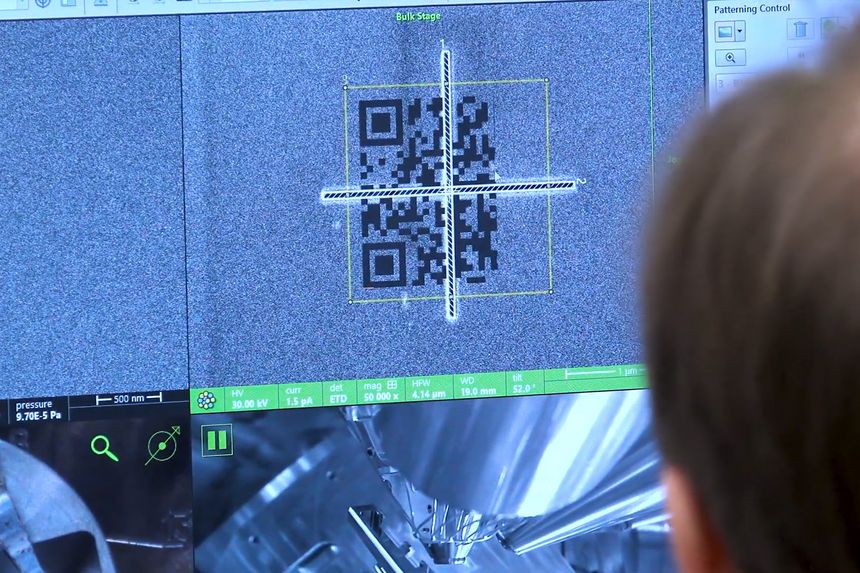
"With ceramic storage media, we are pursuing a similar approach to that of ancient cultures, whose inscriptions we can still read today," Alexander Kirnbauer, a senior scientist in the Thin Film Materials Science Research Group at TU Wien, said in the statement. "We write information into stable, inert materials that can withstand the passage of time and remain fully accessible to future generations."
A more eco-friendly solution to AI dependence
Another benefit of tiny ceramic QR codes is that they do not require energy input or cooling to preserve the data. Data centers, by contrast, require constant electricity to power servers and maintain cooling systems to prevent damage from overheating. They accounted for around 1.5% of the world's electricity consumption in 2024, according to the International Energy Agency.
RELATED STORIES—New 'DNA cassette tape' can store up to 1.5 million times more data than a smartphone — and the data can last 20,000 years if frozen
—Microsoft can now store data for 10,000 years on everyday glass thanks to laser breakthrough
—This new DNA storage system can fit 10 billion songs in a liter of liquid — but challenges remain for the unusual storage format
A more environmentally friendly alternative to the massive carbon-guzzling data centers we depend on is urgently needed, especially as our reliance grows with the rapid expansion of artificial intelligence (AI). Market research firm IDC estimates that the amount of data the world produces in one year will have tripled from 173.4 zettabytes (173.4 billion TB) in 2024 to 527.5 ZB in 2029.
The team is now looking into other materials for their QR codes, techniques to increase writing speeds, and industrial-scale manufacturing methods. They also want to see if more complex data structures than QR codes can be written onto and read from ceramic films.
 Fiona Jackson
Fiona Jackson is a freelance writer and editor primarily covering science and technology. She has worked as a reporter on the science desk at MailOnline, and also covered enterprise tech news for TechRepublic, eWEEK, and TechHQ.
Fiona cut her teeth writing human interest stories for global news outlets at the press agency SWNS. She has a Master's degree in Chemistry, an NCTJ Diploma and a cocker spaniel named Sully, who she lives with in Bristol, UK.
View MoreYou must confirm your public display name before commenting
Please logout and then login again, you will then be prompted to enter your display name.
Logout Read more Meet the world's smallest AI supercomputer — it packs 'doctorate-level intelligence', its makers say, and can fit into your pocket
 Scientists build 'most accurate' quantum computing chip ever thanks to new silicon-based computing architecture
 Record-breaking feat means information lasts 15 times longer in new kind of quantum processor than those used by Google and IBM
 Scientists smash record for superposition, bringing quantum world tantalizingly close to reality
 'Earthquake on a chip' uses 'phonon' lasers to make mobile devices more efficient
 'Thermodynamic computer' can mimic AI neural networks — using orders of magnitude less energy to generate images
Latest in Computing
Meet the world's smallest AI supercomputer — it packs 'doctorate-level intelligence', its makers say, and can fit into your pocket
'Thermodynamic computer' can mimic AI neural networks — using orders of magnitude less energy to generate images
Latest in Computing
Meet the world's smallest AI supercomputer — it packs 'doctorate-level intelligence', its makers say, and can fit into your pocket
 Ultrafast quantum chemistry engine could speed up the development of new medicines and materials
'Thermodynamic computer' can mimic AI neural networks — using orders of magnitude less energy to generate images
Microsoft can now store data for 10,000 years on everyday glass thanks to laser breakthrough
Ultrafast quantum chemistry engine could speed up the development of new medicines and materials
'Thermodynamic computer' can mimic AI neural networks — using orders of magnitude less energy to generate images
Microsoft can now store data for 10,000 years on everyday glass thanks to laser breakthrough
 MIT designs computing component that uses waste heat 'as a form of information'
 Google Glass has found yet another lease of life — but is it too little too late for smart glasses?
Latest in News
Google Glass has found yet another lease of life — but is it too little too late for smart glasses?
Latest in News
 Universe-shaking collision of black hole and neutron star could upend our understanding of monster cosmic mergers
 Vernal equinox 2026: When is the first day of spring?
 Pre-Inca culture acquired Amazonian parrots from hundreds of miles away to use their feathers to decorate the dead, new analysis reveals
 1,300-pound spacecraft will crash to Earth today following intense solar activity, NASA warns
 Single protein could dramatically alter trajectory of Alzheimer's disease
 Falling meteorite smashes hole in roof of German house after spectacular 'fireball' explosion over Europe
LATEST ARTICLES
Falling meteorite smashes hole in roof of German house after spectacular 'fireball' explosion over Europe
LATEST ARTICLES 1Woman born without a vagina or cervix went on to conceive a son naturally
- 2Universe-shaking collision of black hole and neutron star could upend our understanding of monster cosmic mergers
- 3Vernal equinox 2026: When is the first day of spring?
- 4This Garmin watch is a runner's dream, and it's never been this cheap before
- 51,300-pound spacecraft will crash to Earth today following intense solar activity, NASA warns